
Working A Line (Part 2)
A Valuable Practice Concept For All Instruments

In Part 1, I explained the process for Working A Line in order to open our ears to new ideas and absorb them so they become organic.
I highly recommend that you have an understanding before moving on so please take a look.
Now, in Part 2, we’ll look at additional examples to expand the concept.
Phrases that work best are ones that are enclosed in a short shape outlining a single harmonic idea. This is opposed to something like a bebop phrase played over a sequence of chord changes.
Line 1. In this example we have a five note phrase, it repeats descending in a whole step.
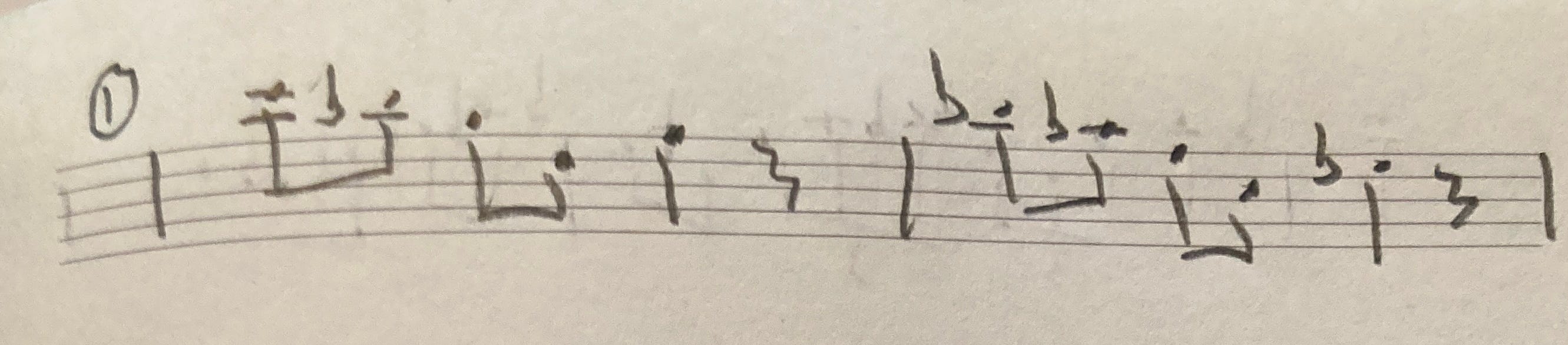
Here, we are going assign a tonality/harmonic relationship to our example. Look at the first measure, there are several ways to categorize this phrase. I think of it as a G minor pentatonic, but your conception could also be Bb major, C7 mixolydian, C7(sus4), F6, you could even think of it as E7(alt). Different ways of thinking lead to different emphasis and applications.
Line 2. We are going to change the rhythm, eliminate the rests, and make all the notes into 8th notes. Now the phrases run together and shift tonality. You can hear the phrase as a 5 note shape played over 4/4 time.
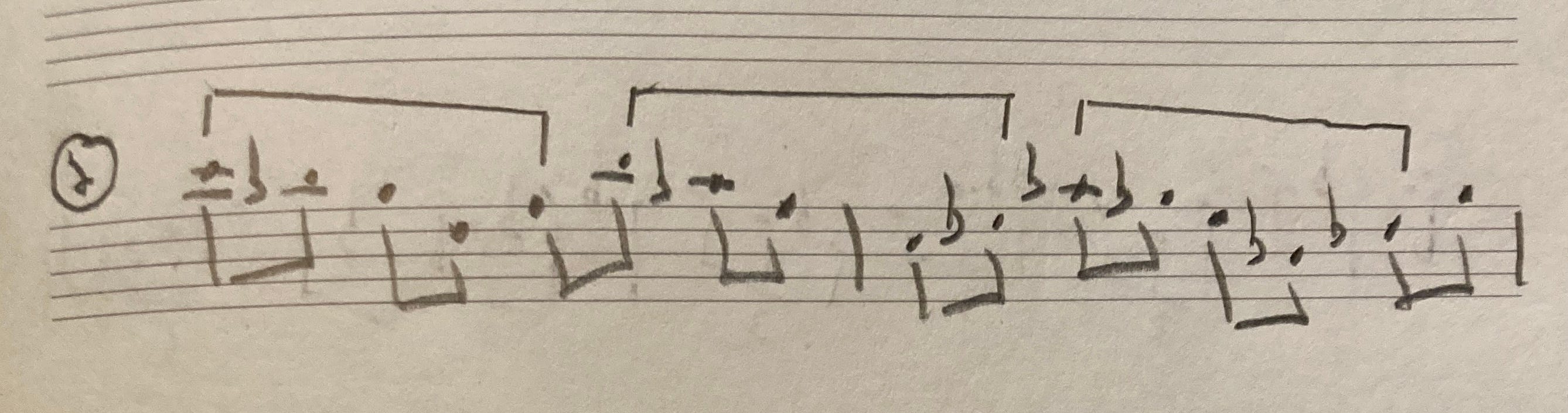
Play the line descending in whole steps until you come back to the original tonality one octave lower. You will have covered 6 tonal centers.
Once you have the initial phrase together and can play it functionally, do not write out the variations. Start slow and use a metronome. Have your ear, brain, and fingers do the work. This is critical and the most efficient way for absorbing and retaining the ideas.
Using the method described in Working A Line (Part 1), displace the phrase by using the first note as an 8th note pickup. Essentially shifting the entire shape and phrase back by one 8th note. Play the line down through one octave. Continuing, add variations by using the first 2 notes as a pickup, then the first 3 notes as a pickup, then the first 4, then the first 5 notes (the entire phrase as a pickup).
In order to cover all 12 key centers, start the phrase one half step lower on the note B, you can think of the phrase as starting on F# minor pentatonic.
Since we have a 5 note phrase and we are running it together, the phrase and tonality are already shifting and overlapping. As you work through the variations your ear will identify where you have already duplicated a phrase and working through the variations should become less of a brain crunch.
Line 3. Now let’s change the rhythm and make the phrase 8th note triplets.
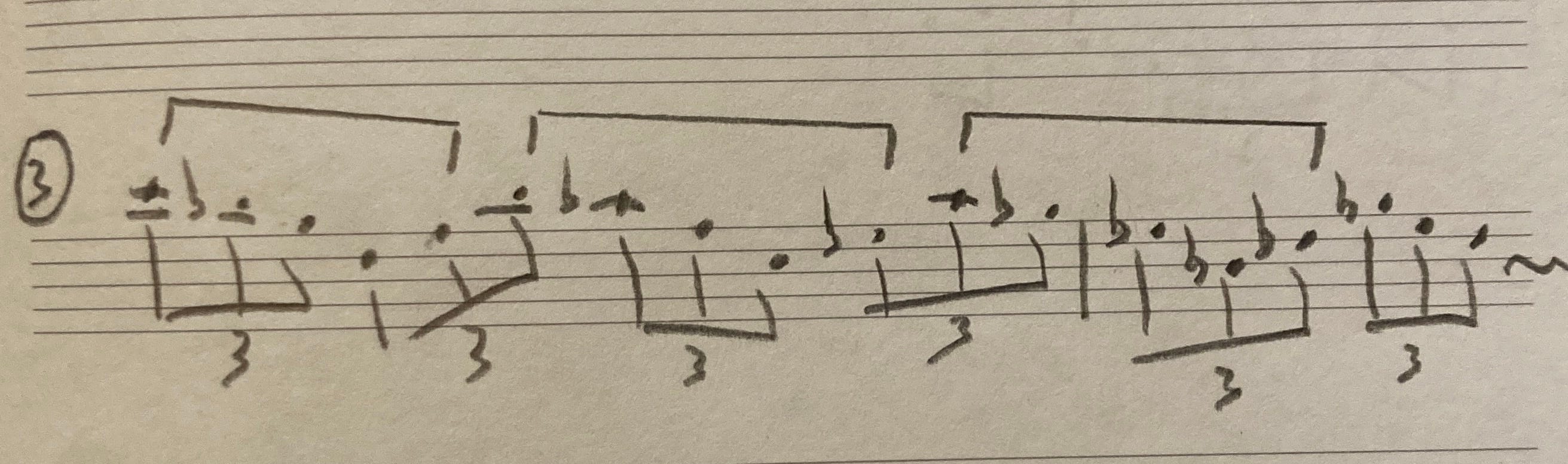
We can go through the method and progression of displacing the phrase by shifting it forward in the time by one 8th note triplet, same as we did with Line 2.
Line 4 and Line 6. We can alternate 8th notes and 8th note triplets to create new phrases.
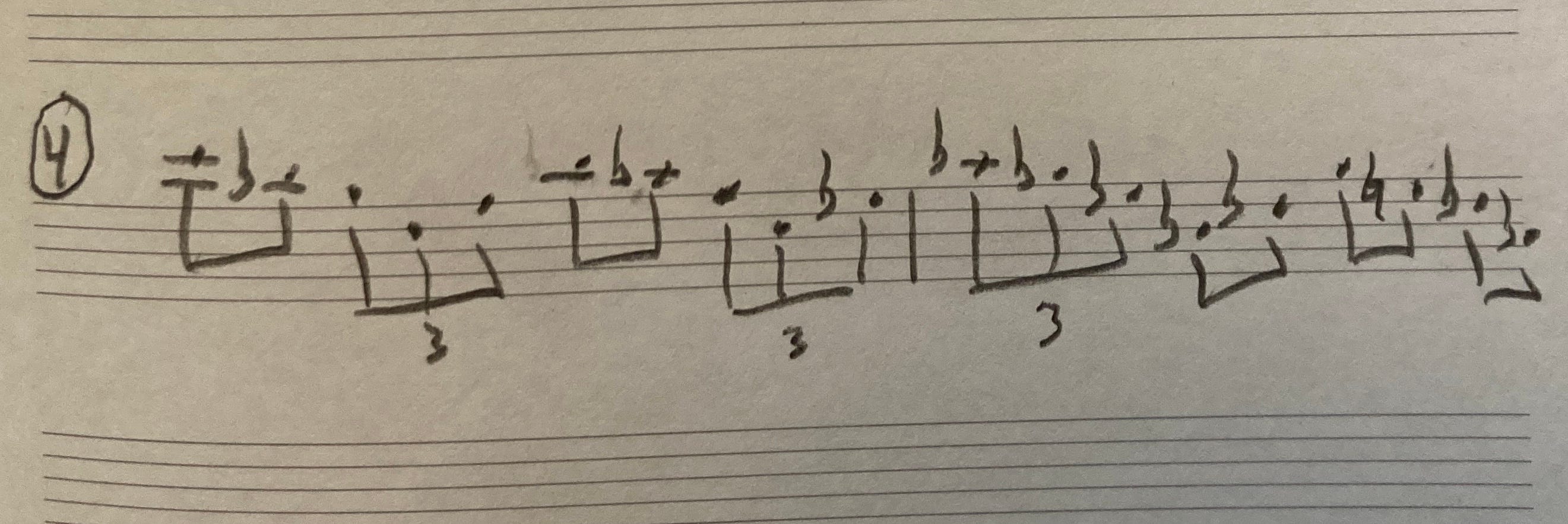
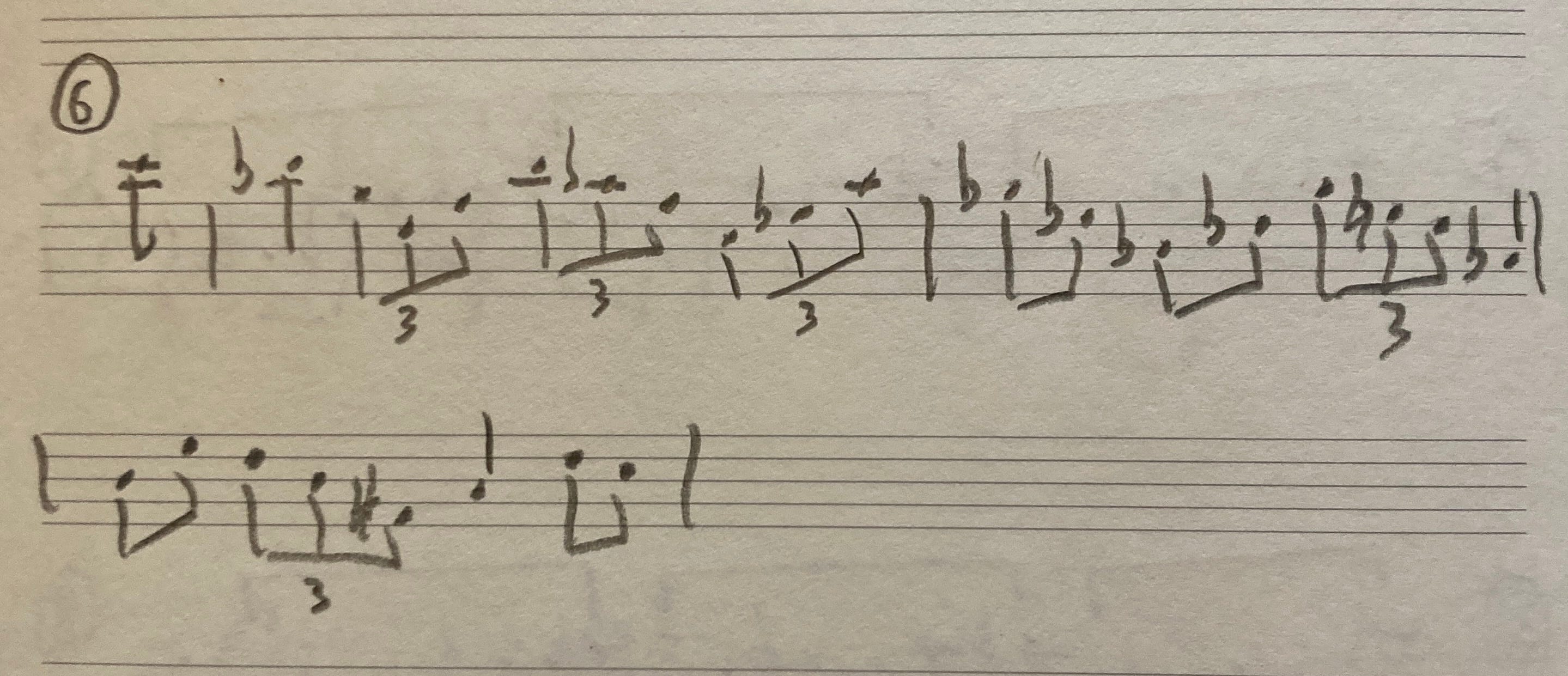
Let’s look at our phrase. We have worked through several variations rhythmically and displacing the phrase by moving the tonality descending in whole steps. Another way of “Working A Line” is to change the interval in which we move the tonality.
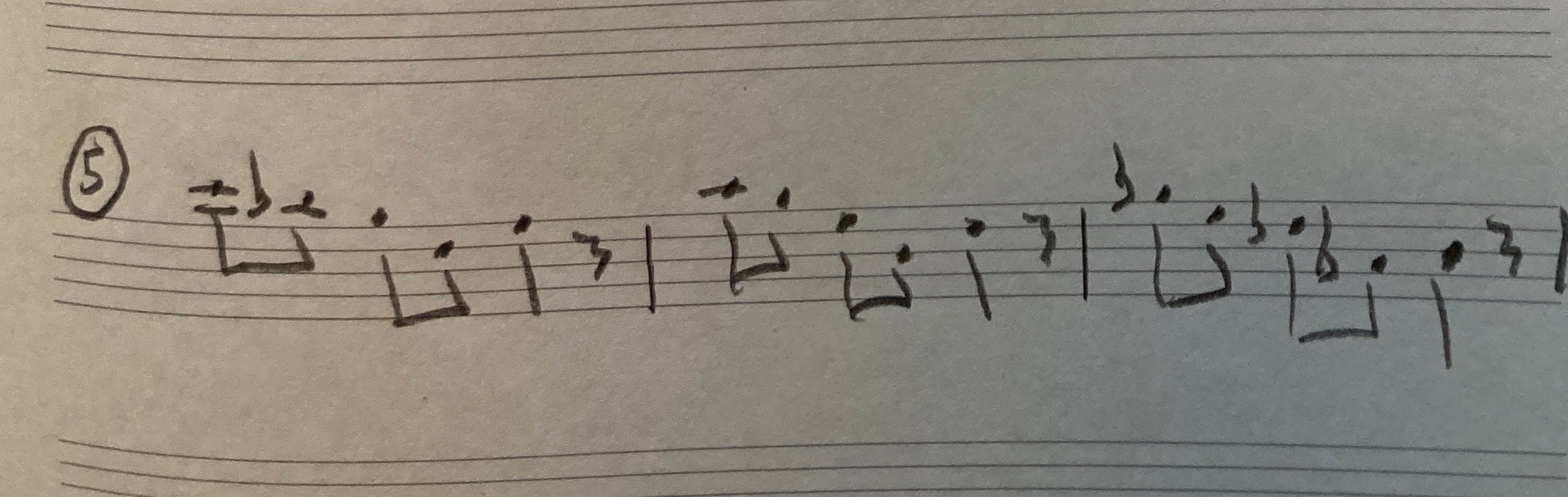
Line 5. Here is an example of the same 5 note phrase, this time descending in minor 3rds. First conceive of the phrase so that is starts on the downbeat of the bar. Then you can apply the phrase displacement and rhythmic variations.
You might be asking yourself where do these lines come from?
Transcribing, it can be a phrase you’ve lifted from a solo you like.
Melodic fragments of melodies from songs, jazz standards, and blues.
Paying attention when practicing, finding and isolating something in your own playing.
A melody or concept from an instructional book or video.
When practicing, especially if you are learning something in all keys, take the phrase that you like and apply this technique. It’s good to have a notebook handy. For all of these examples I urge you to experiment.
Try different directions, ascending and descending
Try different directions, altering ascending and descending
Try moving the phrase in different intervals to change the tonality. Minor 2nds, major 2nds, minor 3rds, major 3rds, tritones, etc.
Change the rhythm, alternate rhythm groupings to form a new sequence
Change the rhythm, alternate rhythm groupings randomly and improvise
Listen to the variations that you create. When you hear something that you really like, if it sounds cool and appealing to you, then focus on that. Really spend time on that idea so that you can execute it seamlessly. Understand it conceptually so that you can apply it when hearing it beyond any thinking. This is practice that requires time and dedication. Strengthening the connection between what you want to express, what you are truly hearing, and your instrument is one of the most substantive things a musician can accomplish.
-Michael