
Reed Talk
The Most Important Thing About Your Reed and how to achieve it.

The MOST IMPORTANT aspect is that the reed seals perfectly on the table of the mouthpiece.
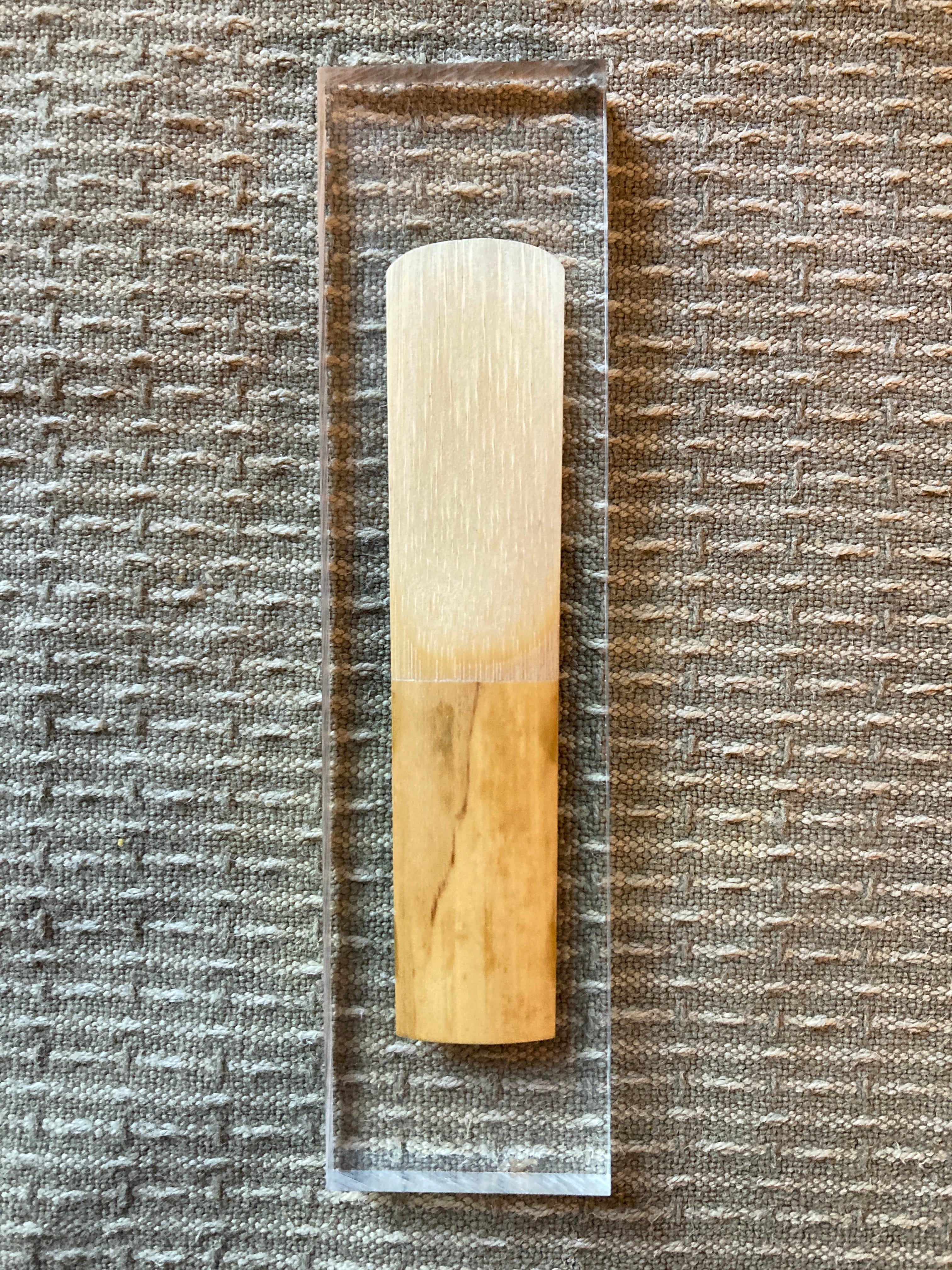
With a new reed, we want to flatten the back before playing. This can be accomplished simply with a sheet of regular printing paper, it has enough texture to accomplish the task. Take the paper and put it on a flat surface. Feel the bottom of the entire reed, it will probably have a slight roughness and feel not entirely smooth. Now take the reed and move it back and forth on the paper in the direction back to tip with light pressure. Feel the reed again and you should notice that it feels very smooth. You are ready to play. You can also do this very well with a reed tool, although I recommend using paper first to see how it goes. There are several reed tools on the market, and the tool will also assist with adjustments on the cut of the reed when necessary. If using a reed tool or knife, make adjustments very, very gently. A little does a lot. On the back of the reed I am hesitant to use sandpaper or polishing cloths, I find that they do too much, even the very fine grain ones (although they can be useful with adjustments on the vamp.)
Now moisten the reed, I like to use a small glass or bowl with lukewarm water. Once the reed is moistened and placed on the mouthpiece you can check the seal with a “Pop Test”. Place the back of the mouthpiece on your hand and then suck all the air out of the mouthpiece so that the reed where it attaches to the facing curve creates a seal. Take your mouth off the mouthpiece and wait. You should have a second or a few seconds until the reed releases creating an audible “pop” sound. If you don’t get any pop or the reed doesn’t stay attached after suction, go back and flatten the reed gently.
After playing when you remove the reed, look at the back and if you have a good seal you will see that the moisture has not gone past where the facing ends. On the mouthpiece there should be very little moisture on the table, if any.
Do the paper adjustment for the first few times you play a new reed. If you’re getting a good seal you won’t have to flatten the back any longer. Frequently when you feel that a reed is not good or “off”, check the seal. If you don’t have a good seal repeat the process and play the reed again in comparison.
As for breaking in new reeds, see my post.
NOTE: When testing a different mouthpiece, play a new reed or one that’s barely used. After playing a reed for a while it will establish a good seal and that reed is “set up” and accustomed to the facing and table on that particular mouthpiece. On another mouthpiece the reed will play, perhaps well, but the comparison is inaccurate.
- Michael