
Melodic Overtone Practice
A Concept Beyond Long Tones

Overtone practice on saxophone is a beautiful and valuable process in developing sound and tone on the instrument. Most frequently we see overtone exercises as long tones. This is excellent work and should be practiced. We can expand on that and also approach overtones as part of a melodic line. That’s what we’ll explore here.
Although these exercises are specific to saxophone, this concept can be applied to all woodwind and brass instruments.
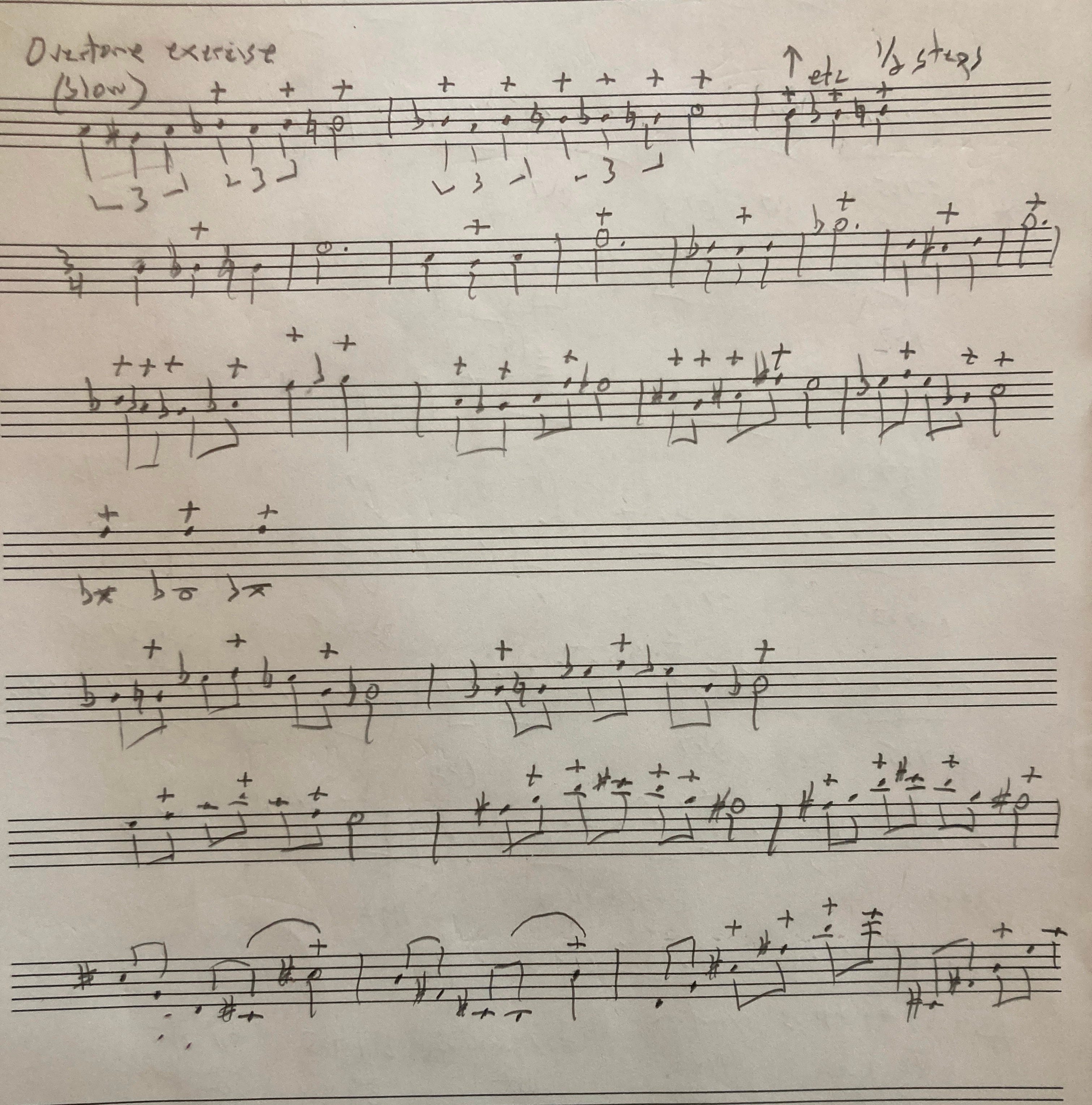
Let’s talk about producing overtones on the saxophone. With all wind instruments the player is blowing air through a tube. The length of the tube determines the pitch, longer length = lower pitch. The player plays different notes, changing the length of the tube by using the keys, valves, or a slide depending on the instrument. Each note has it’s lowest pitch, called the fundamental, and harmonic overtones above that. When we produce an overtone, we are isolating one of the harmonic partials in absence of the fundamental.
Brass instruments require much more frequent manipulation and control of the overtones, notes are produced in conjunction with buzzing the lips and using the valves or slide. For saxophone, playing the full range of the instrument does not require any overtone production. The notes are facilitated by the tone holes and keys, and some of these vent the instrument to produce notes in octaves with the same fingering. Because of the design of the saxophone, players are less familiar and adept with the overtones.
Playing the overtones brings a connection with the tube instead of just the keys, using the airstream and embouchure adjustments to make the notes on the horn.
The concept and exercises here also work very well in conjunction with my previous post; Saxophone as Spiritual Practice
As I mentioned above, overtones are valuable practice and are typically presented as long tone exercises. That’s as it should be and it’s where to start out. If we add overtone practice to melodic lines it helps us identify the feeling of producing the overtone and facilitates more accomplished technique. With practice you can become adept at including overtones when improvising lines and phrases. For now, the focus of this post, we are going to start to incorporate overtones in simple melodies and shapes as practice.
Take a look at Lines 1 & 2. We are incorporating overtones into a melodic line, in this case the major scale.
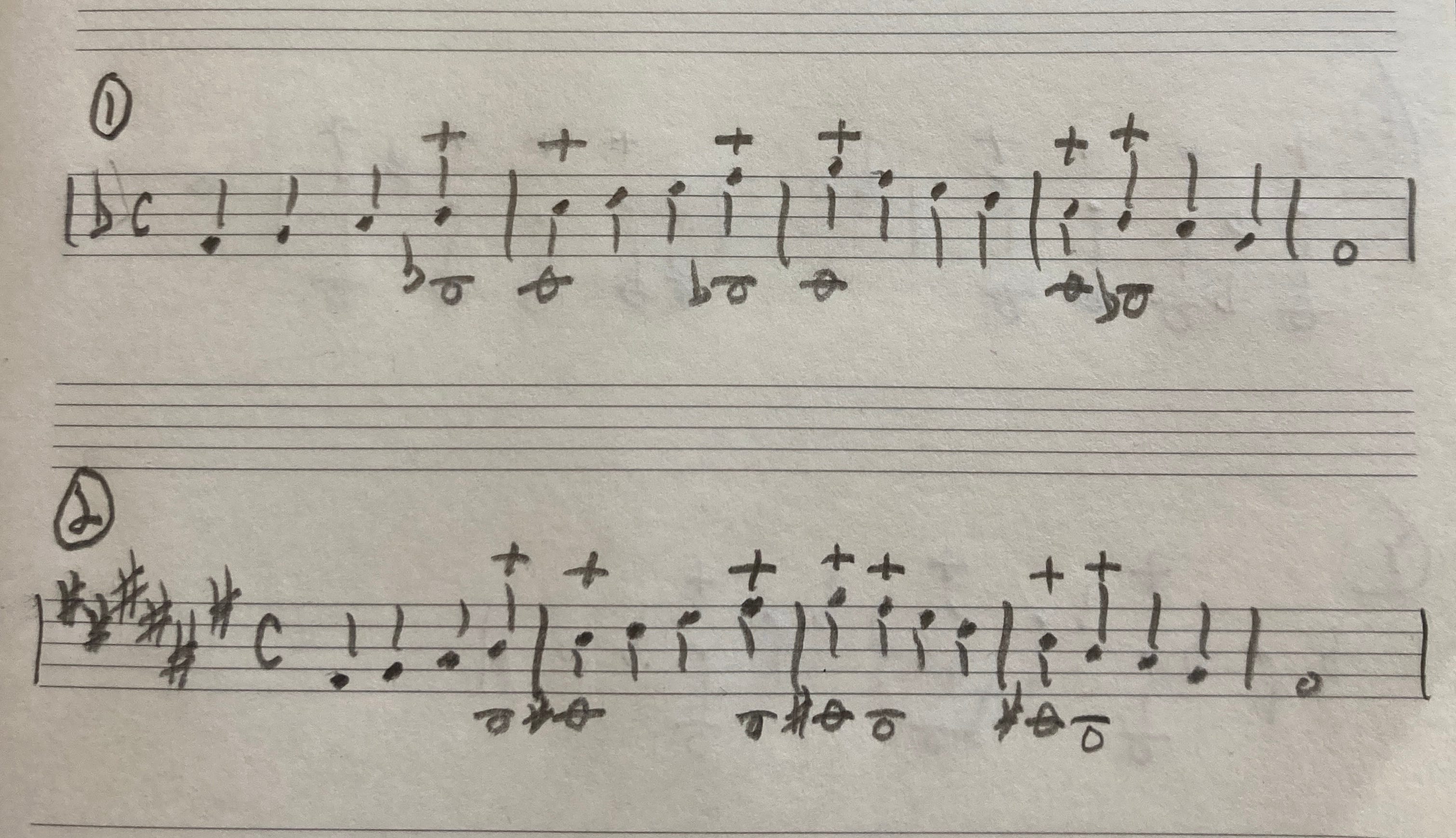
Line 1 - The F major scale with overtones included. I have the overtone placement dictated by the + symbol above the note, with the fundamental fingering indicated by the note underneath. For example on beat 4 of Line 4 play the fingering for low Bb and adjust your embouchure and throat to produce the Bb on octave above. For beat 4 of the second measure finger low Bb and to produce the F on the top line of the staff.
Line 2 - The F# major scale with overtones included.
Go slowly. The intention is to isolate and produce the overtone in the line. This is not a fast technical exercise. Slur the exercises but tongue the overtone note as needed.
Follow the exercises accordingly fingering the fundamental note where indicted by the + and producing the pitch above as notated on the staff.
Line 3 - A chromatic line moving in and out of overtones and standard fingerings.
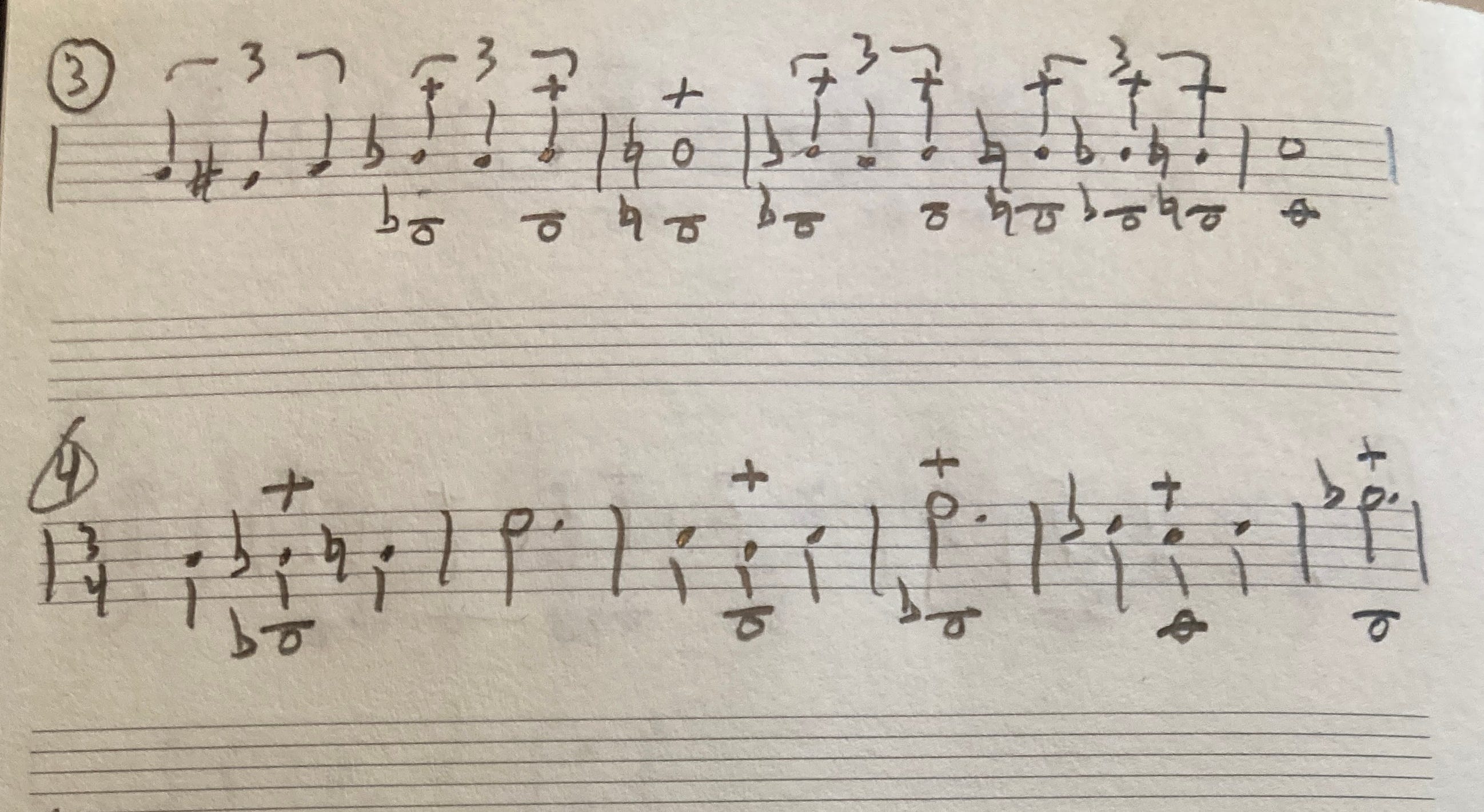
Line 4 - A chromatic line with an interval added, essentially 5, b5, 5, and root of a key center. The line ascends in 1/2 steps.
Go slowly, with intention.
When we approach playing overtones in this method we are “voicing” the notes on the saxophone. We are asking our ears and body to connect and make the necessary adjustments and micro-adjustments in order to produce the line with the overtones.
Line 5 - A chromatic line and interval where the fingering is to a lower fundamental but requiring the proper embouchure and throat adjustments to produce the higher pitch.
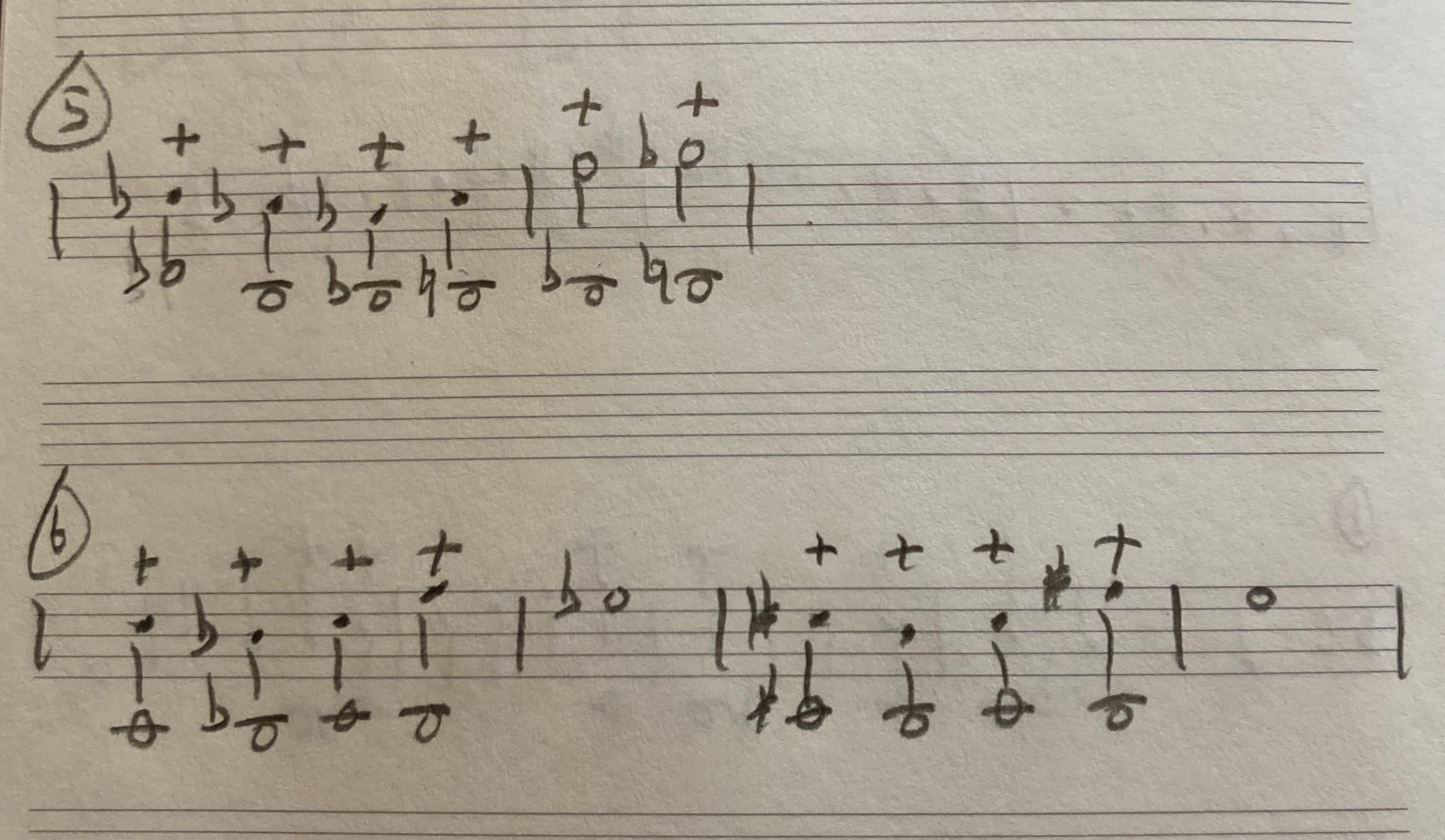
Line 6 - Also requires the proper adjustments to play the correct pitch, and shifting from overtone to a standard fingering. Look at the beats 2 and 4 in the first measure. Bring awareness to the feeling of producing different overtones and pitches with the same fundamental fingering. Also be aware of the feeling when going from the overtone to a standard fingering such as beat 4 of the first measure into measure 2 and beat 4 of the third measure into measure 5.
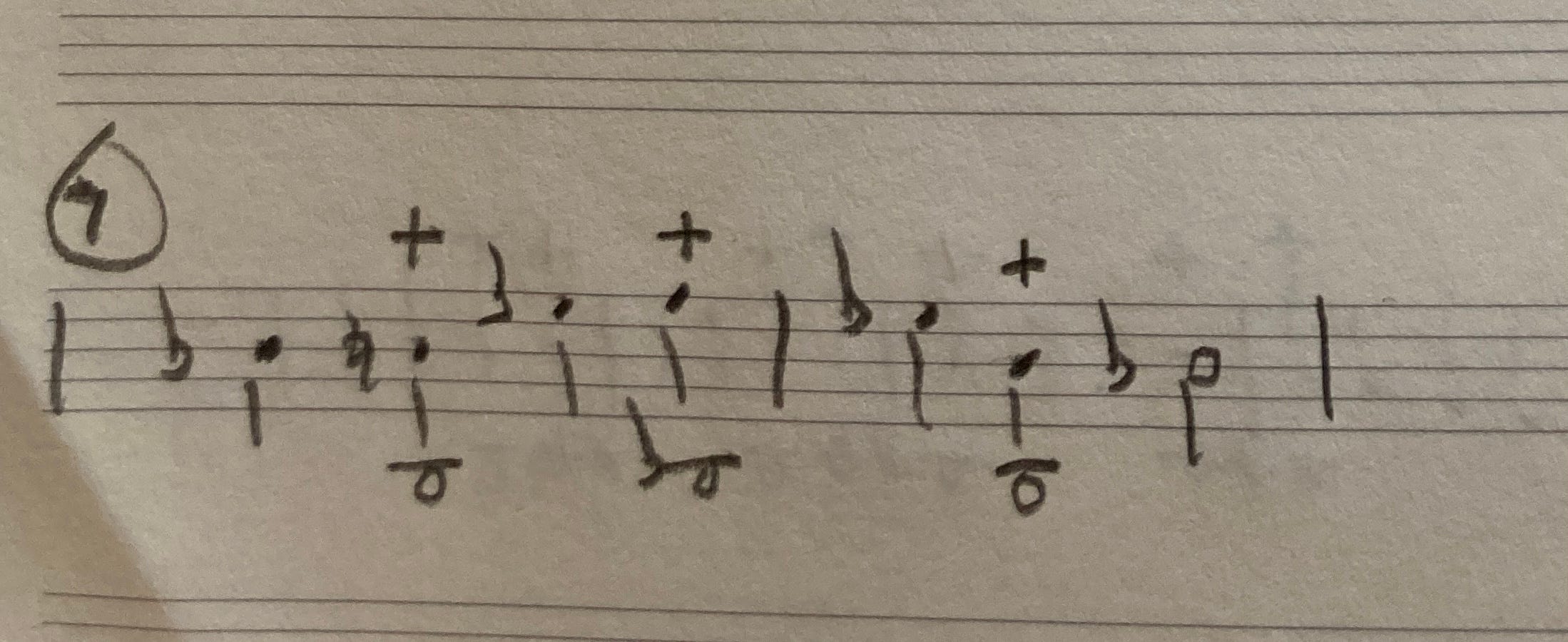
Line 7 - Requires fingering a lower note and playing a higher overtone. Focus on the feeling of going in and out of the overtone fingerings and how the air column changes in the saxophone.
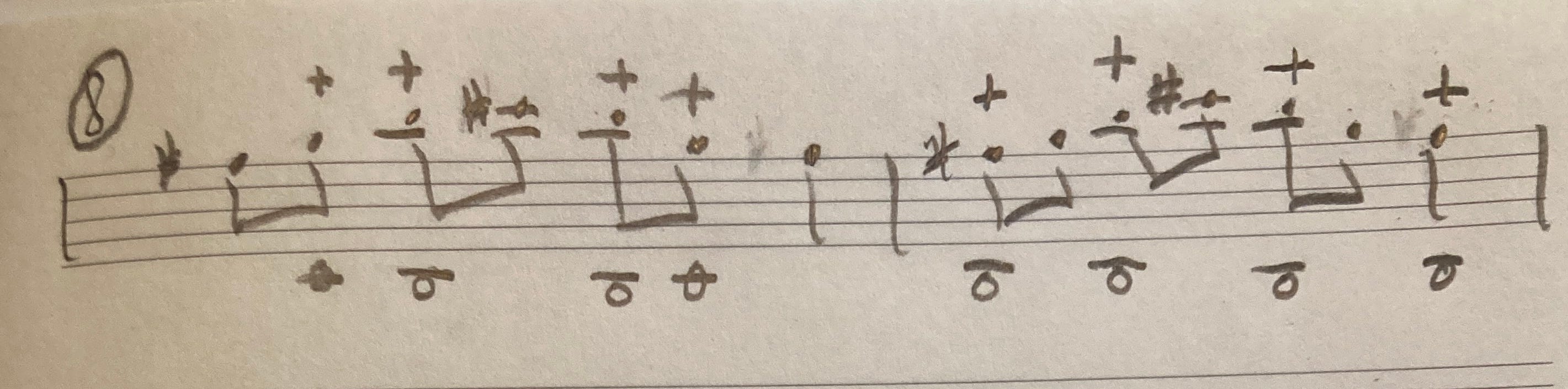
Line 8 - We are playing the same idea in both measures but selecting different notes to incorporate as overtones.
Go slowly, tongue the notes.
Lines 9 & 10 - Additional melodic shapes with overtones included. Tongue the note with the overtone.
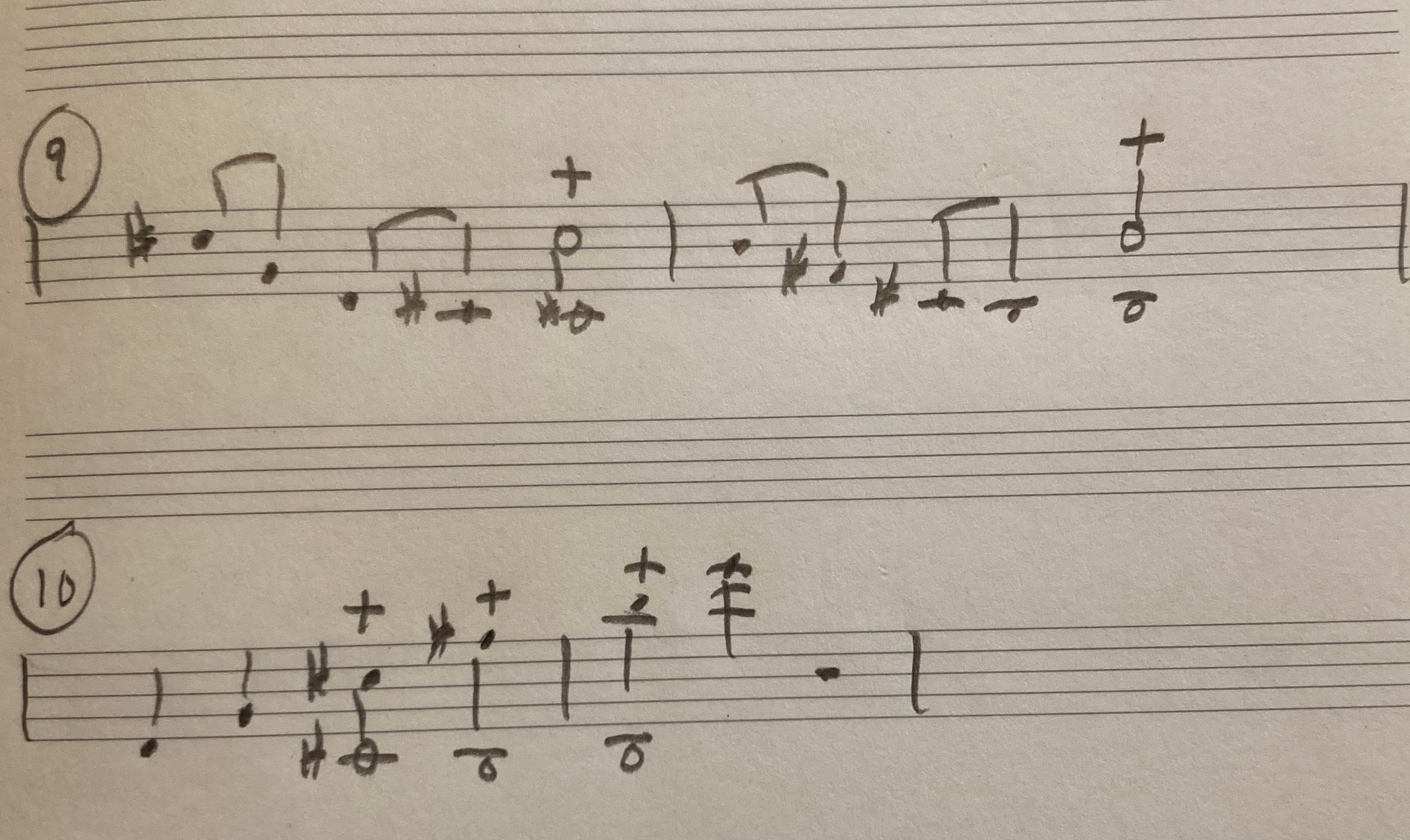
As you go through these 10 ideas you will identify some patterns and commonalities. Take those and develop more ideas from them.
If a phrase ascends in 1/2 steps you can continue the phrase applying overtones where opportunities occur. You can apply this to Lines 3, 4, 5, and 6.
For Line 7 you could change the pitches of the standard fingerings on beats 1 and 3 to a neighboring note.
For Line 8 you can select variations of which notes to play overtones and which notes to play standard fingering.
Explore creative practicing. Make your own phrases, looking for opportunities where you can incorporate overtones.
Overtone practice assists you in having more awareness and control of the pitch, tone, and sound of the saxophone. This provides you with a greater palate for expression. I hope you find this concept enjoyable, interesting, and productive while adding it to your regular practice regimen.
-Michael
Wow! Another terrific lesson here Michael. Very thorough and inspiring. Thanks….gotta go now and get in the shed with my horn!